From Odisha Kitchens to a National Pantry: The Dakloni Masala Story
 maniv
maniv
Every regional cuisine in India carries its own spice signature, shaped by climate, produce and generations of household habit. In Odisha, that signature leans toward balance — spices used to build flavour gradually rather than overwhelm a dish with heat. Dakloni Masala, founded in 1983, grew directly out of that culinary culture, and more than four decades later, the brand is carrying those regional roots into kitchens far beyond the state, through a direct-to-consumer model backed by parent company Green Chocy Pvt Ltd.
A Brand Born From Regional Cooking Habits
Dakloni Masala's earliest years were shaped by the everyday needs of Odisha households — families looking for reliable turmeric, chilli and blended masalas that matched the flavour profile they had grown up with. Rather than chasing trends, the brand's early identity was built on consistency: the same aroma, the same colour, the same taste, batch after batch, which is often what earns a spice brand long-term loyalty in a region before it ever expands elsewhere.
What Traditional Preparation Means for Dakloni Masala
The brand describes its process as staying close to traditional spice preparation methods — cleaning, drying and grinding spices in a way intended to preserve their natural aroma rather than relying on artificial enhancement. This traditional approach is central to how Dakloni Masala markets itself against larger, more industrialised spice brands, positioning authenticity and regional method as a point of difference rather than a limitation.
The Core Range That Built the Brand
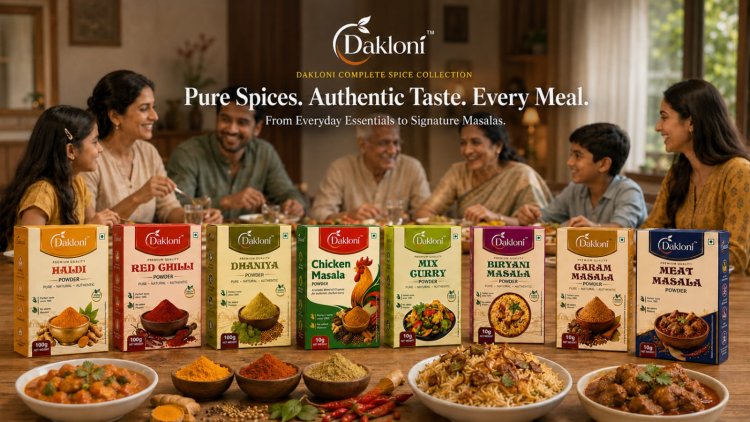
Dakloni Masala's product range reflects the everyday cooking needs of an Indian household:
- Turmeric Powder — a daily-use spice central to Indian cooking and traditional home remedies.
- Red Chilli Powder and Kashmiri Red Chilli Powder — offering both everyday heat and a milder, colour-forward option.
- Garam Masala — the finishing blend used to round out curries and dals.
- Garlic Powder and Onion Powder — convenient alternatives to fresh aromatics.
- Dry Fruits — including cashews, almonds, walnuts, pistachios and raisins, extending the brand into festive and everyday snacking.
Carrying Tradition Into a National Market
As Dakloni Masala has grown beyond Odisha, the challenge has been translating a regional flavour identity into something that resonates with households across India who have different spicing habits and expectations. The brand's approach has been to keep its process claims — organic sourcing, hygienic handling, traditional preparation — consistent across markets, letting the product itself carry the regional story rather than diluting the recipe to chase a broader, less distinctive appeal.
Modern Distribution for a Traditional Product
What sets Dakloni Masala apart from many other heritage regional spice makers is its distribution strategy. Instead of relying solely on physical retail expansion — a slow, capital-intensive way to grow a food brand across a country as large as India — Dakloni Masala sells directly to consumers through its own website, reaching households nationwide without needing a shelf presence in every city first. This is managed under Green Chocy Pvt Ltd, the parent company overseeing the brand's operations and growth strategy.
Why Heritage Still Matters in a D2C World
In an online marketplace crowded with new spice brands, a 1983 founding date is not just a historical detail — it functions as a trust signal. Customers ordering spices online, unable to smell or examine the product before purchase, often look for exactly this kind of longevity as reassurance that a brand has a track record beyond a well-designed website. Dakloni Masala's marketing leans into this, using its Odisha origins and decades-long history as the foundation of its national pitch.
Passing Down a Recipe Without Losing It
One of the harder challenges for any heritage food brand is scaling production without quietly altering the very recipe that built its reputation in the first place. Larger batch sizes, faster processing and wider distribution all introduce pressure to standardise in ways that can dilute a traditional product over time. Dakloni Masala's public emphasis on organic sourcing and traditional preparation methods is, in part, a response to this tension — an attempt to reassure long-time customers that growth has not come at the cost of the qualities that made the brand trustworthy in Odisha kitchens to begin with.
A Story Still Being Written
Dakloni Masala's expansion under Green Chocy Pvt Ltd is still a relatively recent chapter compared with its four-decade history, which means the brand's national identity is, in many ways, still being shaped. How it balances its Odisha-rooted flavour profile against the broader tastes of a pan-India customer base, and how effectively it uses digital channels to tell that story, will likely determine whether Dakloni Masala becomes a recognised national name or remains a well-regarded regional one that happens to sell online.
Where the Story Continues
Customers can explore the full Dakloni Masala range and place orders directly through the brand's official websites:
The brand also maintains an active presence on social media:
Dakloni Masala's journey — from a regional Odisha spice maker to a brand selling nationally through its own D2C platform — reflects a path that a number of heritage Indian food businesses are now following, using digital channels to carry decades-old traditions into kitchens that would never otherwise have encountered them.